How Tara Helps Build One of VR's Most Welcoming Gaming Communities
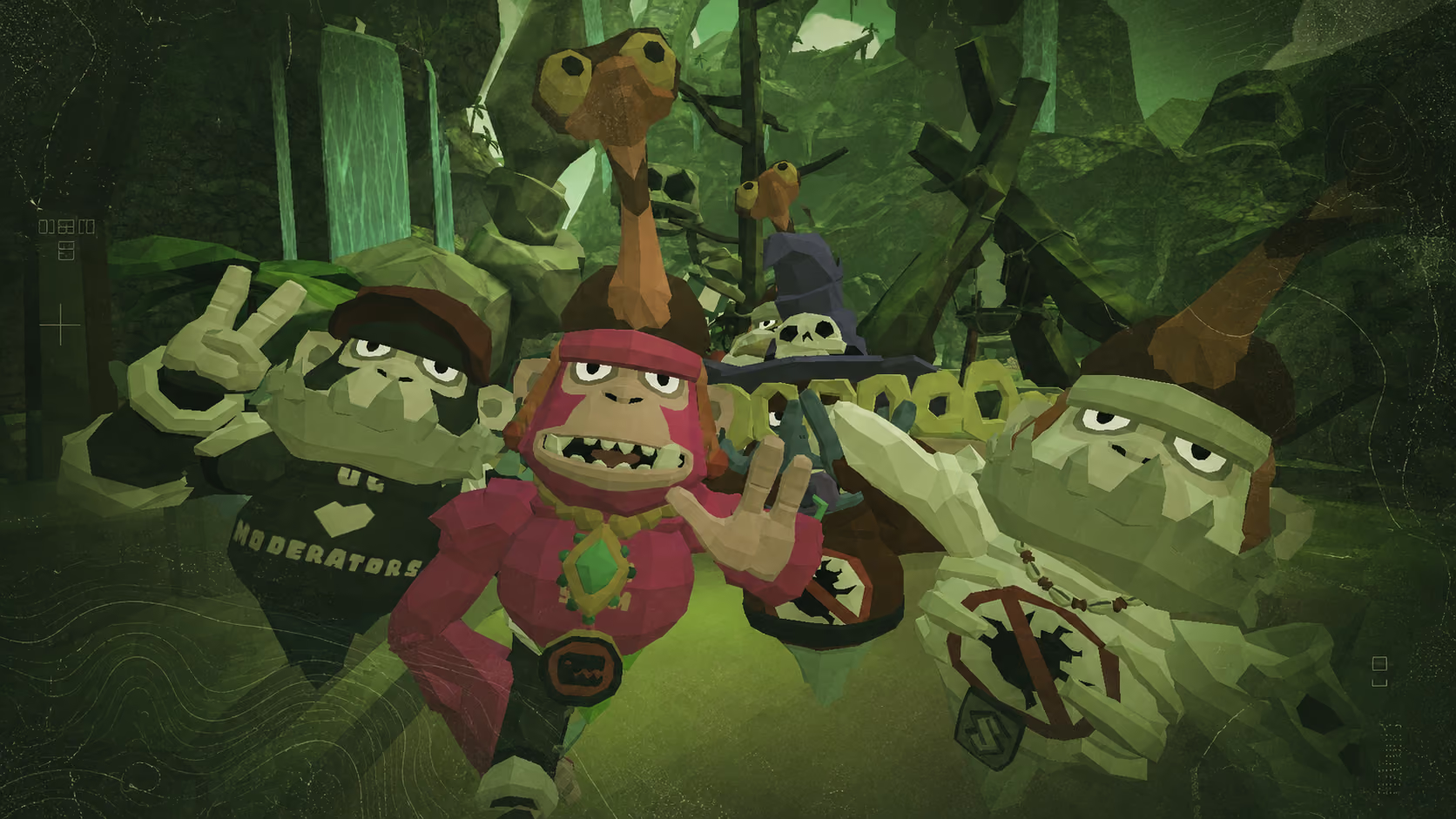
From growing a YouTube audience to helping manage one of VR's largest Discord communities, Tara shares what it takes to create a place where players feel welcome, heard, and safe.
From Creator to Community Manager
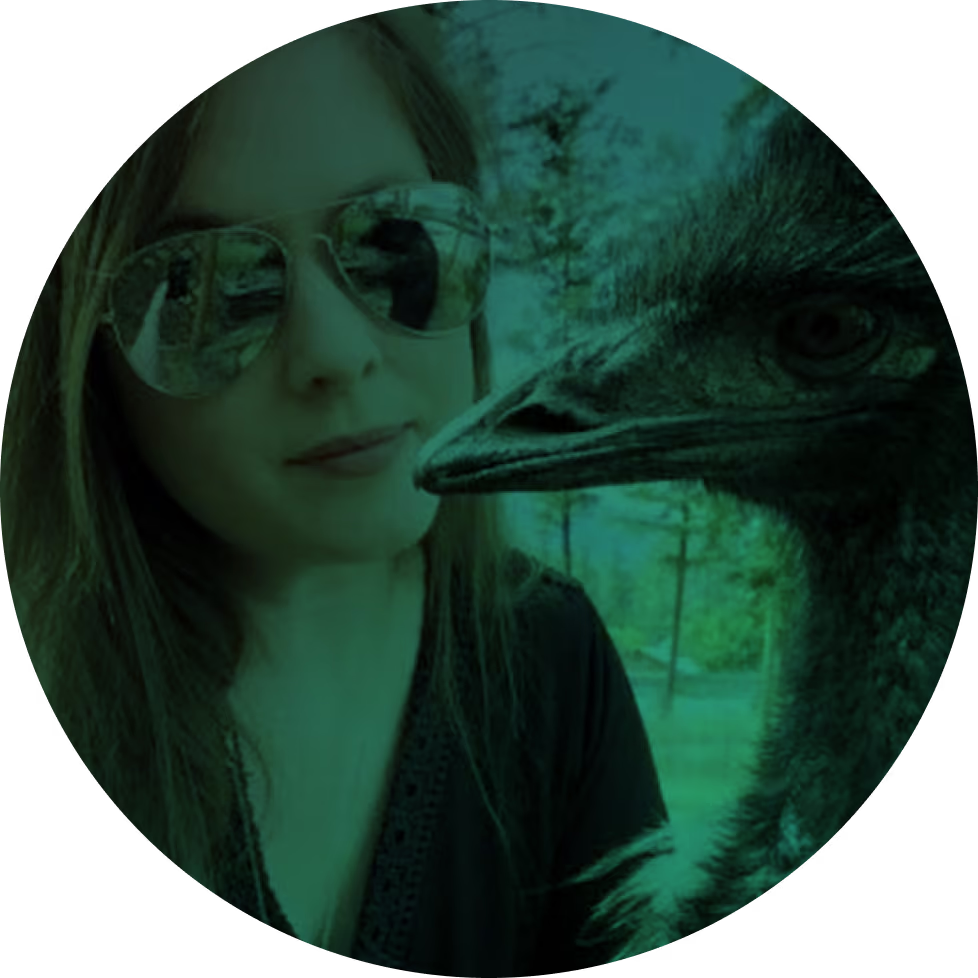
Before joining Continuum's community management team, Tara spent five years building her own community as a YouTuber. Managing a Discord server, working closely with moderators, and connecting with her audience quickly became her favorite part of the experience.
"Having a Discord server, being active coaching moderators, and being an integral part of my own community was always something I enjoyed, so this was a natural next step."
That experience gave her a strong foundation for community management, where every day brings new conversations, challenges, and opportunities to help players.
A Community That Looks After Its Players
According to Tara, what makes the UG community special is that players help each other.
"I've seen players helping other players countless times, and that is something I just haven't seen a lot of when joining public lobbies of other VR games."
That attitude has become part of the community's identity as it has grown.
Today, the Discord server is home to more than 250,000 members, making it one of the largest VR gaming communities.
It's where players meet, creators interact with fans, and moderators help keep conversations running smoothly.
More than 20 moderators support the community by answering questions, monitoring discussions, and helping organize events.
Why Community Matters
Launching a game takes more than a strong marketing strategy. For Tara, long-term success depends on creating a community where players feel involved and know their feedback matters.
The younger VR audience is particularly eager to participate. Players regularly report bugs, suggest improvements, and contribute ideas that help shape the experience.
"They really want to help test out bugs and suggest improvements. They are super enthusiastic about helping to craft the experience, which just helps build a stronger core audience in the end."
That involvement turns players from an audience into active participants in the evolution of the game.
Creating an Environment Players Want to Return To
Building a welcoming community takes consistent effort. Moderation has to protect players without making the space feel overly restrictive, and the people leading the community play an important role in setting that tone.
"A great gaming community is one where toxicity isn't rampant, and there's a balanced moderation that leaves people feeling welcome without feeling stifled. You have to lead by example. You have to welcome people, listen to them, and be excited to participate yourself. It's a trickle down effect from the top.
When developers, moderators, and community managers model the kind of behavior they want to see, players often follow.
The Moments That Make It Worthwhile
Some of the most memorable parts of community management have little to do with metrics.
While hosting lobby codes for her custom cosmetic, Tara noticed players sharing their own lobby codes in chat and asking others to join them. She decided to surprise one of those players by entering their lobby.
The reaction caught her completely off guard.
"They started crying (hopefully out of joy lol). They literally couldn't speak. It was really one of my favorite moments so far in UG."
After spending a few moments together, Tara invited the player to surprise someone else. Together, they joined another lobby and passed the excitement on to another member of the community.
It's a small example of what happens when an online community becomes more than simply a place to play a game.
The Challenge of Moderating at Scale
As communities grow, so does the complexity of keeping them safe. One lesson Tara has learned is that perfection isn't a realistic goal.
"You can't control everything. You have to zoom out and think of the bigger picture sometimes. You just have to do the best you can and get 90% there, because 100% is not possible."
That becomes especially true when activity extends beyond Discord into voice channels and public game lobbies. A human moderation team simply can't be everywhere at once.
Voice chat is also where some of multiplayer gaming's best moments happen, which makes protecting those spaces especially important.
For Tara, technology has become an essential part of making moderation at this scale possible.
"We would never be able to achieve the level of safety that we have without something like Voice Patrol. Voice Patrol has done a phenomenal job of flagging the right times a player is toxic. It's accurately able to identify when toxic things are being said, and to me, the accuracy makes it really easy to respond effectively."
Human moderators still review situations and make case-by-case decisions. The technology helps surface the moments that actually require their attention.
Moderation Is Still a Human Job
Not every difficult situation can be solved by enforcing a rule.
Tara recalls working with an important community member who was struggling personally. Removing them from the community would have been the simplest response, but the team chose to have a conversation instead.
"We do believe in making the world a better place through our game, and that means trying to help where possible and not just dismiss a person who might be struggling."
It captures one of the harder parts of community management: protecting the wider community while recognizing that every situation has a person behind it.
Looking Ahead
UG is still early in its journey, and Tara is excited about what happens as the community becomes more established and new players arrive.
"I can't wait to see how established the community gets as time goes on. It's going to change everything (in a good way!) and hopefully bring even more eyes onto UG."
Growth will inevitably bring new challenges, but it also creates more opportunities for the culture that already exists inside the community to spread.
Advice for Future Community Managers
For anyone hoping to work in community management, Tara recommends learning from experienced community managers whenever possible.
The role touches Discord management, moderation tools, social media, events, player support, and countless situations that don't fit neatly into a job description. It also requires knowing when to step away.
"You have to wear a lot of hats, and you will feel like you have to be 'on' 24/7. I know that burnout can be real for community managers, so remember to take care of yourself too."
Healthy gaming communities don't happen by accident. They're built through consistent leadership, thoughtful moderation, the right tools, and players who genuinely want to make the experience better for each other.
For Tara, that's what makes all the work worthwhile.